คำถามที่พบบ่อย
Today, more pet owners are becoming interested in pet stem cell banking because stem cells are known as regenerative cells that play an important role in supporting tissue repair and overall health. In veterinary medicine, stem cells are increasingly being explored as part of supportive care approaches for conditions such as osteoarthritis, joint inflammation, kidney disease, skin disorders, and age-related degeneration.
Collecting stem cells while pets are still healthy may help preserve better-quality cells, since both cell quality and quantity may naturally decline with age.
For this reason, preserving stem cells early is considered a proactive way to prepare for a pet’s future health and wellness needs
PetGeneX provides pet stem cell banking services for both dogs and cats, including stem cell collection, cell expansion, and long-term cryogenic storage under laboratory quality standards, helping pet owners plan ahead for their beloved pets’ future care.
Dog stem cells and cat stem cells may be used alongside veterinary treatment plans for various inflammatory, degenerative, and tissue-related conditions.
Osteoarthritis & Hip Dysplasia
Stem cells may help support joint health, reduce inflammation, and assist in cartilage tissue repair.
Chronic Kidney Disease (CKD)
Stem cells may help support kidney function and reduce inflammatory processes in certain cases.
Autoimmune & Immune-Mediated Diseases
Stem cells may help support immune system balance and regulation.
Chronic Wounds & Delayed Healing
Stem cells may assist in tissue regeneration and wound recovery.
Neurological Conditions & Nerve Injuries
Preliminary studies suggest stem cells may help support certain aspects of nerve and neurological recovery.
Liver Disease
Including chronic hepatitis and liver degeneration, stem cells may help support liver cell recovery and reduce inflammation.
Inflammatory Bowel Disease (IBD)
In some cases with limited response to medication, stem cells may help support reduction of intestinal inflammation.
Bone, Muscle & Tendon Injuries
Including fractures, tendon injuries, and muscle damage, stem cells may assist tissue repair and recovery.
Skin Disorders, Burns & Non-Healing Wounds
Stem cells may support skin regeneration and damaged tissue recovery.
Bone Marrow Suppression & Certain Anemia Conditions
There are ongoing studies exploring stem cells for supporting blood cell regeneration in specific conditions.
Post-Surgical Recovery & Tumor Surgery Recovery
Stem cells may help support recovery, reduce inflammation, and improve overall healing after major surgery.
Many pet owners today choose to preserve stem cells for dogs and cats while their pets are still healthy, helping prepare for future regenerative and wellness support options if needed
Note: Stem cell applications should always be evaluated and supervised by a licensed veterinarian. Outcomes may vary depending on each pet’s condition and overall health. Stem cell therapy is not considered a guaranteed cure.
The best time to store pet stem cells is while dogs and cats are still healthy and relatively young
As pets age or develop chronic diseases, inflammation, or degenerative conditions, the quality and quantity of natural stem cells may gradually decline. Preserving stem cells during a healthy stage may help maintain better cell quality for future use.
For this reason, many pet owners choose to preserve stem cells for dogs and cats during early adulthood or before senior age as part of long-term wellness planning.
Common Timing for Pet Stem Cell Collection
- While pets are still healthy
- Before entering senior age
- During spay/neuter procedures (for adipose-derived stem cells)
- At birth (for umbilical cord stem cell collection)
Blood-derived stem cell collection, an innovation offered by PetGeneX, makes pet stem cell banking more accessible because it does not require surgery or general anesthesia, making it suitable for proactive long-term health planning
In some cases, dogs and cats may still be able to store stem cells even after developing certain illnesses or chronic conditions
However, the suitability of pet stem cell collection depends on the pet’s disease condition, age, overall health, and veterinary evaluation.
In pets with chronic inflammation, long-term disease, or advanced age, the quality and quantity of natural stem cells may decline compared to cells collected during a healthy stage. For this reason, preserving stem cells while pets are still healthy is generally considered more beneficial for long-term cell quality.
That said, some pets with existing health conditions may still be eligible for stem cell collection and expansion depending on laboratory assessment and veterinary judgment.
Situations That Require Veterinary Evaluation Before Stem Cell Collection
- Certain cancers
- Severe infections
- Specific blood-related disorders
- Immune-mediated diseases
- Pets with severe physical weakness
PetGeneX and the veterinary team will help evaluate whether stem cell banking is appropriate and recommend the safest and most suitable option for each pet
However, PetGeneX currently recommends stem cell collection from 3 primary sources — blood, adipose tissue, and umbilical cord tissue — because these methods are generally safer, less invasive, and more suitable for long-term wellness planning.
1. Peripheral Blood Stem Cells (PBSCs)
Blood-derived stem cell collection is currently one of the most popular methods because it is safe, convenient, and minimally invasive.
The procedure involves collecting an appropriate amount of blood by a veterinarian without surgery, general anesthesia, or mobilizing agents.
PetGeneX is the first company in Thailand to successfully isolate and expand Mesenchymal Stem Cells (MSCs) from pet blood.
Advantages
- No surgery required
- No general anesthesia
- Minimal invasiveness
- Faster recovery
- Reduced surgical risks
- Suitable for proactive future stem cell banking
Suitable For
Healthy dogs and cats whose owners want to preserve stem cells for future regenerative care.
2. Adipose Tissue Stem Cells
This method collects stem cells from adipose (fat) tissue, usually from the abdominal or groin area.
The procedure requires minor surgery and general anesthesia, and is often performed alongside spay/neuter surgery or other planned surgical procedures.
Advantages
- Relatively high stem cell yield
- Commonly used in regenerative veterinary medicine
Limitations
- Requires surgery
- Requires anesthesia
- Recovery time may be needed
Pets already scheduled for spaying, neutering, or other surgical procedures.
3. Bone Marrow Stem Cells
Bone marrow stem cells are collected from areas such as the hip or femur bone and require anesthesia and more complex medical procedures.
This method is generally reserved for specific medical situations, particularly conditions related to blood or bone marrow disorders.
Limitations
- More invasive than other methods
- More complex procedure
- Higher discomfort and procedural risks
- Not commonly recommended for preventive stem cell banking
For this reason, PetGeneX generally does not recommend bone marrow stem cell collection for routine preventive pet stem cell banking. Blood, adipose tissue, and umbilical cord stem cell collection are considered safer and more appropriate options for long-term wellness planning
4. Umbilical Cord Stem Cells
Umbilical cord stem cells are collected once after the birth of puppies or kittens and do not interfere with the mother’s health.
These stem cells are considered “Virgin Cells,” meaning they are highly youthful and have not yet undergone age-related degeneration.
Advantages
- Highly youthful cell source
- Collected from birth
- Excellent for long-term wellness planning
Limitations
- Requires advance planning
- Can only be collected during delivery
Suitable For
Pregnant pets, breeding programs, and owners who wish to preserve the highest-quality cells from the earliest stage of life.
The most suitable stem cell collection method depends on each pet’s age, health condition, lifestyle, and veterinary evaluation. PetGeneX and the veterinary team will help assess and recommend the most appropriate option for every dog and cat
Today, pet stem cells are gaining increasing attention in the field of regenerative veterinary medicine and senior pet wellness because stem cells play an important role in supporting tissue repair and overall body recovery
As dogs and cats age, they may experience degeneration, chronic inflammation, reduced mobility, muscle weakness, and decline in overall wellness and organ function.
For this reason, dog stem cells and cat stem cells are being explored as part of supportive wellness and regenerative care approaches for senior pets. Stem cells may help support:
Potential Wellness and Regenerative Support Areas
- Reducing inflammation
- Supporting tissue and joint recovery
- Improving mobility and quality of life
- Supporting post-surgical and injury recovery
- Assisting long-term senior pet wellness care
However, stem cell applications for anti-aging and wellness support should always be evaluated and supervised by a licensed veterinarian. Outcomes may vary depending on each pet’s condition and overall health.
Because of this, many pet owners choose to preserve stem cells for dogs and cats while their pets are still healthy, helping prepare for future wellness and regenerative support options
PetGeneX offers a variety of stem cell banking packages,
thoughtfully designed to meet the unique healthcare needs of every family.
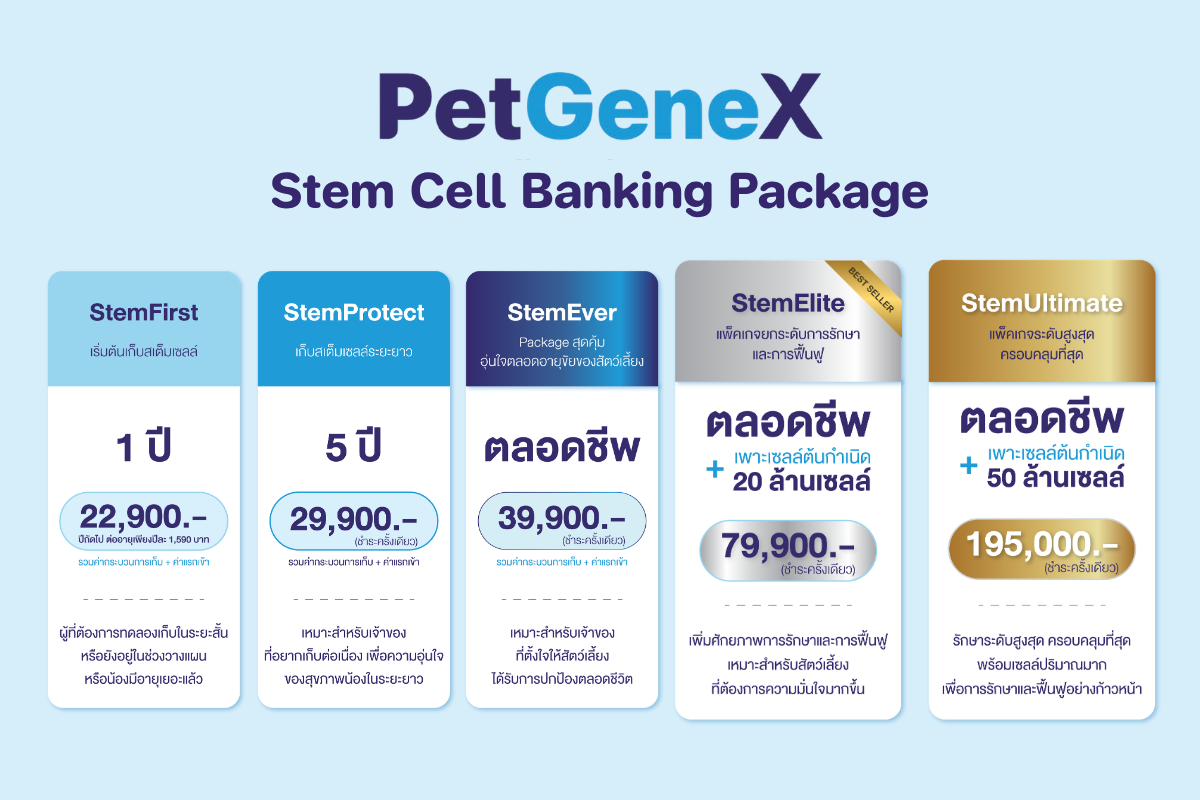
However, the suitability of pet stem cell banking depends on factors such as age, overall health, chronic diseases, and veterinary evaluation.
As pets age, the quality and quantity of natural stem cells may gradually decline. Chronic inflammation, age-related degeneration, and underlying medical conditions may also affect cell quality. For this reason, collecting stem cells while pets are still healthy is generally considered the ideal timing.
That said, some senior pets with relatively good overall health may still be eligible for stem cell collection and expansion. Blood-derived stem cell collection, in particular, is considered a minimally invasive option because it does not require surgery or general anesthesia.
Factors Considered by Veterinarians
- Pet’s age
- Existing medical conditions
- Inflammation or infection status
- Overall health condition
- Quality of the collected cell sample
PetGeneX and the veterinary team will help evaluate whether stem cell banking is appropriate and recommend the safest and most suitable option for each dog and cat
Today, dog stem cells and cat stem cells are increasingly being explored in veterinary medicine to support regenerative care for conditions such as osteoarthritis, joint inflammation, kidney disease, skin disorders, mobility problems, and age-related degeneration, depending on veterinary evaluation and treatment planning.
Many pet owners ask: “Is pet stem cell banking really necessary?”
The answer is that it may not be essential for every pet owner, but it is considered an additional long-term health planning option for those who want to prepare ahead for their pets’ future needs.
As pets age, the quality and quantity of their natural stem cells may gradually decline. Preserving stem cells while pets are still healthy may help maintain better cell quality and ensure that their own cells are available for future use if needed.
For this reason, many families choose to store stem cells for their dogs and cats as a proactive investment in their beloved pets’ future wellness and regenerative care
PetGeneX provides pet stem cell banking services, including stem cell collection, cell expansion, and long-term cryogenic storage under laboratory quality standards.
If you are planning to store stem cells for your dog or cat, pet owners should first consult with a veterinarian for an initial health evaluation to determine whether the pet is suitable for stem cell collection
Preparation may vary depending on the collection method, such as blood-derived stem cells, adipose-derived stem cells, or umbilical cord stem cells.
Preparing for Pet Stem Cell Collection
1. Veterinary Health Evaluation
A veterinarian will assess the pet’s overall health, age, medical history, inflammation status, and possible infections to determine suitability for stem cell collection.
2. Prepare Your Pet’s Medical Information
Examples include:
- Age
- Weight
- Medical history
- Current medications
- Chronic diseases
- Surgical history
This information helps veterinarians and laboratory teams plan the most appropriate stem cell collection approach.
3. Fasting Before Certain Procedures
For adipose tissue stem cell collection or procedures requiring anesthesia, pets may need to fast before the procedure according to veterinary instructions.
However, blood-derived stem cell collection is minimally invasive and generally does not require complicated preparation or surgery.
What Happens After Stem Cell Collection?
After collection, the sample is transferred to the laboratory for:
- Cell isolation
- Quality assessment
- Stem cell expansion
- Long-term cryogenic storage
- to help prepare the cells for potential future regenerative and wellness support applications
หากมีข้อสงสัยเพิ่มเติม สามารถติดต่อเราได้ที่
สำนักงานใหญ่
PetGeneX
ธนาคารฝากเก็บสเต็มเซลล์สำหรับสัตว์เลี้ยง
เลขที่ 899/68 หมู่ที่ 21 ต.บางพลีใหญ่
อ. บางพลี จ.สมุทรปราการ 10540
ห้องปฏิบัติการจัดเก็บเนื้อเยื่อและเซลล์ต้นกำเนิดสัตว์เลี้ยง
อาคารอุทยานวิทยาศาสตร์ภาคตะวันออกเฉียงเหนือ 2
ห้องปฏิบัติการจัดเก็บเนื้อเยื่อและเซลล์ต้นกำเนิดสัตว์เลี้ยง
อาคารอุทยานวิทยาศาสตร์ภาคตะวันออกเฉียงเหนือ 2
111 ถนนมหาวิทยาลัย ต.สุรนารี อ.เมืองนครราชสีมา
จ.นครราชสีมา 30000