Pet Stem Cell Therapy for Liver Disease | PetGeneX

Pet Stem Cell Therapy for Liver Disease in Dogs and Cats: Can It Improve Liver Enzymes?
When your dog or cat is diagnosed with liver disease, one of the biggest questions is, "Will my pet ever feel healthy again?"
It can be especially worrying when your pet starts losing their appetite, seems tired all the time, loses weight, or struggles with symptoms that affect their daily life.
Today, pet stem cell therapy is gaining attention in veterinary regenerative medicine for its potential to regulate inflammation, reduce processes associated with liver fibrosis, and support tissue repair.
But what improvements might pet owners notice after stem cell treatment for liver disease? And how can they tell whether their pet is getting better?
In this article, PetGeneX explains what you need to know.

How Can Pet Stem Cell Therapy Help Dogs and Cats With Liver Disease?
When caring for a pet with liver disease, the goal is not just to improve blood test results. It is also about helping your pet feel more comfortable, regain their energy, and enjoy a better quality of life.
Mesenchymal Stem Cells (MSCs) are being studied for their potential to regulate inflammation and support liver tissue recovery.
Depending on the pet's condition and response to treatment, possible improvements may include the following.
1. Improved Liver Enzyme Levels (ALT and ALP)
One of the improvements pet owners hope to see is a gradual decrease in elevated liver enzymes, particularly ALT and ALP.
Some published reports involving dogs with chronic hepatitis have found improvements in liver enzyme levels following MSC treatment.
Based on PetGeneX's internal follow-up observations, most dogs and cats receiving stem cells have shown gradual improvements in liver enzyme levels within approximately one month after their first stem cell treatment, alongside conventional veterinary care.
These observations describe PetGeneX's client experience and do not establish that stem cells alone caused the improvements. Results may vary depending on the type and severity of liver disease, as well as other treatments received.
A decrease in liver enzymes is encouraging, but it does not necessarily mean the liver has fully recovered. Veterinarians must also consider other test results and the pet's overall condition.
2. Visible Improvements in Your Pet's Health
Beyond blood test results, pet owners naturally want to see their dogs and cats feeling better in everyday life.
As liver health improves, some pets may experience changes such as:
- Better appetite: Eating more comfortably and showing greater interest in food.
- More energy: Becoming more active, alert, and interested in daily activities.
- Less vomiting or discomfort: Experiencing fewer digestive symptoms.
- Improved weight and body condition: Gradually regaining weight and strength with appropriate nutrition.
- Reduced jaundice: Yellowing of the eyes, gums, or skin may gradually improve as the underlying liver condition responds to treatment.
These are possible signs of improvement during liver disease management. However, they cannot be guaranteed as direct effects of stem cell therapy.
3. Potential Reduction in Liver Fibrosis
In pets with chronic liver disease, ongoing inflammation can repeatedly damage liver cells.
Over time, the body may replace damaged tissue with scar tissue, a process known as liver fibrosis.
As scar tissue builds up, it can interfere with the liver's structure and ability to function properly.
Stem cells have properties that may help regulate inflammation and slow processes involved in liver fibrosis. Some studies have reported promising results in reducing liver fibrosis.
However, the outcome depends on the severity of the disease and the condition of each pet's liver. More research is needed to confirm these benefits in dogs and cats with naturally occurring liver disease.
4. Supporting Liver Tissue Recovery
The liver has a natural ability to repair itself. However, when damage continues over time, its ability to recover may become limited.
MSCs release biological signals involved in regulating inflammation and supporting tissue repair.
These signals may help create an environment that supports the liver's natural recovery processes.
The potential benefits depend on the type and severity of liver disease, and stem cells cannot guarantee complete liver regeneration.
Why Does Liver Disease Affect Dogs' and Cats' Overall Health?
The liver plays an essential role in keeping your pet healthy. It helps process nutrients, produce important proteins, support digestion, and remove certain waste products from the body.
When liver cells become inflamed or damaged, these functions may be disrupted, affecting several aspects of your pet's health.
Common symptoms of liver disease in dogs and cats include:
- Loss of appetite and weight loss: Liver dysfunction may affect digestion and how the body processes nutrients, causing pets to eat less and gradually lose weight.
- Fatigue and low energy: Inflammation and changes in metabolism can leave pets feeling weak, uncomfortable, or less active than usual.
- Vomiting and nausea: Liver disease may affect the digestive system, causing nausea, vomiting, or reduced interest in food.
- Jaundice (yellowing of the eyes and skin): When the liver or bile ducts cannot process and eliminate bilirubin normally, it may build up in the body and cause yellow discoloration.
However, early-stage liver disease may not cause obvious symptoms. Some dogs and cats are diagnosed only after routine veterinary blood tests reveal abnormal liver enzyme levels.
How Does Pet Stem Cell Therapy Support Liver Recovery?
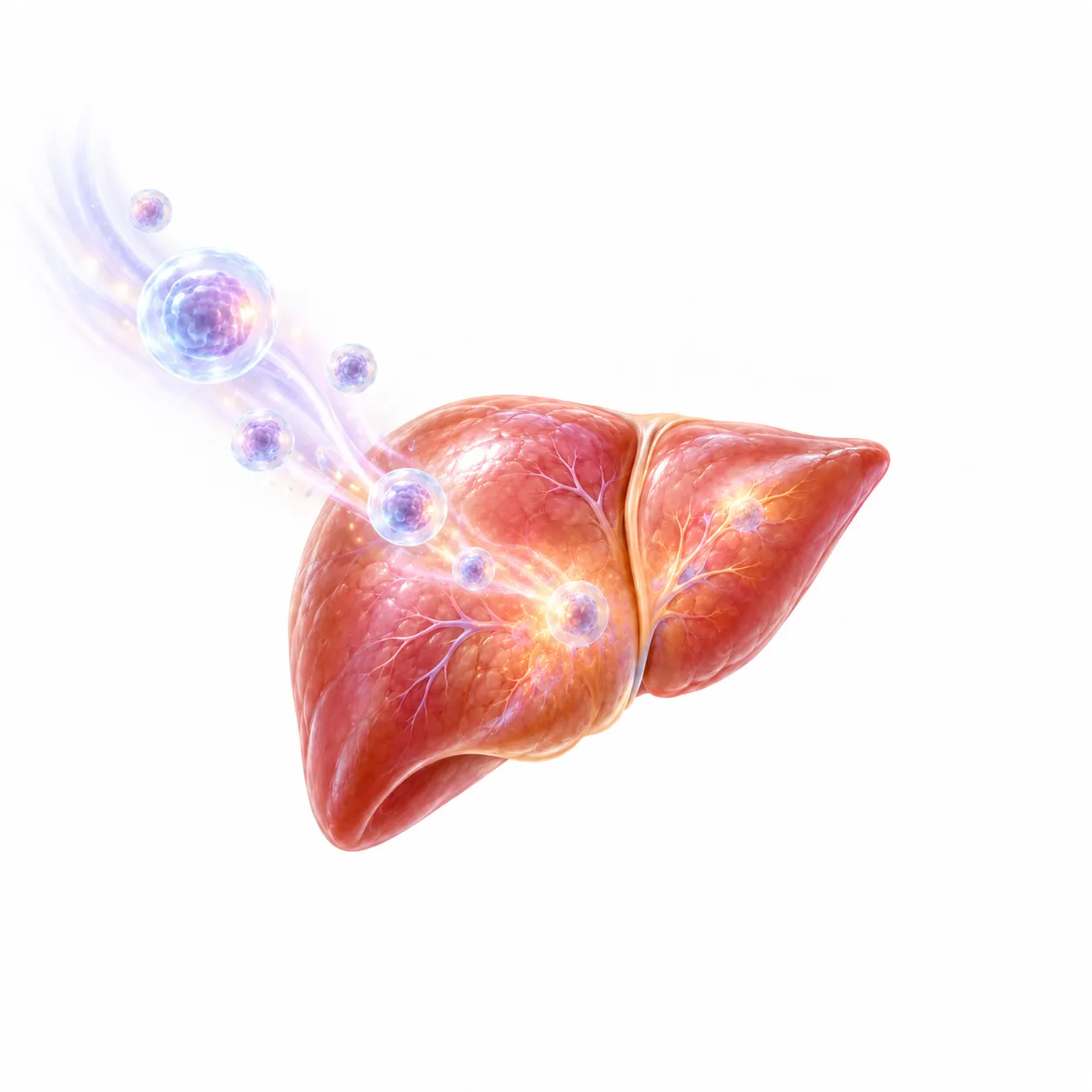
Mesenchymal Stem Cells (MSCs) are known for their ability to communicate with other cells through biological signals.
Researchers are investigating three main ways these cells may support liver health.
1. Regulating the Immune Response
MSCs can interact with immune cells and help regulate inflammatory responses under certain conditions.
This may help reduce inflammatory processes associated with further damage to liver tissue.
2. Reducing Inflammation and Fibrosis-Related Signals
When liver inflammation becomes chronic, certain cells in the liver may become overactive and contribute to scar tissue formation.
MSCs have the potential to influence biological signals involved in inflammation and fibrosis.
By regulating these signals, they may help limit excessive scar tissue formation in certain conditions.
3. Supporting Natural Tissue Repair
MSCs release biological substances that help cells communicate and participate in tissue repair processes.
These properties may support the liver's natural recovery mechanisms and help create conditions that are more favorable for tissue repair.
However, these mechanisms do not mean stem cells can cure every type of liver disease. Treatment outcomes depend on the underlying condition, disease severity, and each pet's individual response.
Can Stem Cell Treatment Be Stopped Once Liver Enzymes Improve?
Additional stem cell treatments may be discontinued if the veterinarian determines that the pet's health and liver enzyme levels have improved sufficiently to meet the treatment goals.
The number of treatments and the duration of care depend on the veterinarian's clinical judgment.
Every dog and cat is different. Their treatment plans may vary based on:
- The type and severity of liver disease
- Their response to treatment
- Their overall health condition
Ongoing monitoring helps ensure that the liver condition stays under control and that your pet continues to receive appropriate long-term care.
Conclusion: Can Pet Stem Cell Therapy Help Dogs and Cats With Liver Disease?
Liver disease can affect many aspects of a pet's health and quality of life. However, appropriate veterinary care may help dogs and cats regain comfort and enjoy their daily activities again.
Pet stem cell therapy is an emerging regenerative medicine approach with potential benefits for regulating inflammation, reducing processes associated with liver fibrosis, and supporting liver tissue recovery.
In some cases, improvements in liver enzyme levels may be accompanied by positive changes in appetite, energy, and overall wellbeing.
However, results vary between individual animals, and stem cell therapy should be considered alongside established veterinary treatments rather than as a replacement for them.
The most important step is to work closely with your veterinarian to develop an appropriate care plan and monitor your pet's progress.
Because caring for a pet with liver disease is about more than improving blood test results. It is about helping them feel better and enjoy their everyday life again.
FAQ: Pet Stem Cell Therapy for Liver Disease in Dogs and Cats
- Can stem cell therapy lower liver enzyme levels in dogs and cats?
Some published reports involving dogs have found reductions in liver enzymes, including ALT and ALP, following MSC treatment.
However, improvements may also be associated with other treatments received at the same time, and results cannot be guaranteed for every pet. - How long does it take to see improvements after stem cell therapy?
Based on PetGeneX's follow-up experience, some dogs and cats have shown gradual improvements in liver enzyme levels within approximately one month after their first stem cell treatment.
However, the response varies depending on the pet's condition, disease severity, and ongoing veterinary care. - Can stem cell treatment be stopped when liver enzymes return to normal?
Additional stem cell treatments may be stopped based on the veterinarian's assessment of liver enzyme levels, clinical symptoms, and overall disease progression.
Even after treatment is discontinued, regular monitoring and appropriate liver disease management remain essential. - Can stem cells help reduce liver fibrosis in dogs?
Studies involving canine liver fibrosis models have reported reductions in scar tissue following MSC treatment.
However, further research is needed to confirm these effects in dogs and cats with naturally occurring liver disease. - Can dogs and cats with liver disease still have their stem cells collected and stored?
Yes, many dogs and cats with liver disease may still be considered for stem cell collection and banking.
Liver disease is not automatically a reason to rule out collection. However, a veterinarian must assess the pet's overall health, suitability for sample collection, and cell quality before storage. - Can cats with hepatic lipidosis receive stem cell therapy?
A veterinarian may assess individual cases, but stem cell therapy has not been established as an effective treatment for feline hepatic lipidosis, also known as fatty liver disease.
Prompt nutritional support and treatment of the underlying cause remain the most important priorities. - Is stem cell therapy for liver disease worth considering?
Whether stem cell therapy is worth considering depends on the pet's health, type and severity of liver disease, potential benefits, treatment costs, risks, and overall care goals.
Pet owners should discuss the expected benefits and limitations with their veterinarian before deciding whether it is an appropriate additional treatment option.
References
- Webster, C. R. L., et al. (2019). ACVIM consensus statement on the diagnosis and treatment of chronic hepatitis in dogs. Journal of Veterinary Internal Medicine, 33(3), 1173–1200.
- Santos, L. G., et al. (2024). Improvement of clinical and laboratory parameters in a canine with idiopathic chronic hepatitis after transplantation of allogeneic mesenchymal cells derived from bone marrow — case report. Arquivo Brasileiro de Medicina Veterinária e Zootecnia, 76(4).
- Matsuda, T., et al. (2017). A canine liver fibrosis model to develop a therapy for liver cirrhosis using cultured bone marrow-derived cells. Hepatology Communications, 1(7), 691–703.
- Cornell University College of Veterinary Medicine. Cholangiohepatitis in Cats.
- Cornell University College of Veterinary Medicine. Hepatic Lipidosis in Cats.
- Sato, K., et al. (2016). Isolation and characterisation of peripheral blood-derived feline mesenchymal stem cells. The Veterinary Journal, 216, 183–188.