Can Senior Pets Still Bank Stem Cells? | PetGeneX

Pet Stem Cell Banking for Senior Pets: Is It Too Late?
As pets grow older, owners may begin considering pet stem cell banking as part of their long-term health planning. As pets grow older, owners may notice changes in their daily routines. They may walk more slowly, struggle to stand up, experience joint discomfort, or develop chronic health conditions that require ongoing care.
The good news is that senior dogs and cats may still be eligible for pet stem cell banking. Age alone does not determine eligibility. Overall health, existing medical conditions, medications, and sample quality must also be considered.
This article explains what to check before collecting stem cells, which collection methods may be suitable for older pets, and how stored stem cells could provide additional options for future veterinary care.

Why Consider Pet Stem Cell Banking for Senior Dogs and Cats?
From conversations with PetGeneX customers, many owners of senior pets share a similar goal: helping their companions maintain a good quality of life as they age.
For some, this means managing joint discomfort and supporting mobility. For others, it means exploring additional care options while managing chronic health conditions.
Mesenchymal Stem Cells (MSCs) have attracted interest in veterinary regenerative medicine because of their ability to interact with inflammatory and immune processes and support tissue-repair signaling.
Pet stem cell banking allows owners to preserve their pet's own cells as a potential resource for future care, should a veterinarian determine that cell-based treatment is appropriate.

Does Age Affect Stem Cell Quality in Older Dogs and Cats?
As pets age, their cells undergo natural biological changes. These changes may affect certain stem cell characteristics, including their ability to multiply during laboratory culture.
Research involving canine MSCs has found that donor age can influence cell proliferation and other biological properties. However, the effects vary depending on the animal, cell source, and laboratory conditions.
Collecting stem cells at a younger age may offer advantages, but being older does not automatically mean a pet's stem cells cannot be collected or cultured.
The most reliable approach is to assess each pet individually and evaluate the collected sample through appropriate laboratory procedures.
What Health Checks Are Needed Before Pet Stem Cell Banking?
Before collecting stem cells from an older dog or cat, a veterinarian should assess the pet's health and determine whether the collection procedure is appropriate.
The American Animal Hospital Association (AAHA) recommends regular health assessments for senior pets, including physical examinations and diagnostic testing based on individual needs.
1. Age and Life Stage Assessment
A pet's age provides useful information about possible health changes, but two animals of the same age may have very different health conditions.
Why it matters: Understanding the pet's life stage helps the veterinarian identify age-related considerations and plan a suitable collection procedure.
2. Veterinary Health Examination
A physical examination assesses body condition, heart rate, breathing, temperature, mobility, and other signs of illness.
It may also reveal health concerns that are not immediately noticeable at home.
Why it matters: The veterinarian can determine whether the pet is healthy enough for sample collection or needs further evaluation first.
3. Complete Blood Count (CBC) Before Stem Cell Collection
A CBC evaluates three important components of the blood:
- Red blood cells: Help identify anemia and related blood abnormalities.
- White blood cells: May indicate infection, inflammation, or changes in immune response.
- Platelets: Help assess potential bleeding or clotting-related concerns.
A CBC alone cannot diagnose every infection or inflammatory condition, so results must be interpreted alongside the physical examination.
Why it matters: Detecting blood abnormalities, possible infections, or inflammatory conditions helps the veterinarian decide whether stem cell collection should proceed or be postponed.
4. Blood Chemistry Tests for Senior Pets
Blood chemistry testing helps evaluate important organ functions, particularly the liver and kidneys.
Common measurements include BUN and creatinine for kidney assessment, ALT and ALP for liver-related abnormalities, blood glucose, proteins, and electrolytes.
These tests are particularly useful in senior pets because some chronic diseases develop before obvious symptoms appear.
Why it matters: Identifying underlying health conditions helps the veterinarian determine whether additional care is needed before collecting stem cells.
5. Chronic Diseases and Current Medications
Senior pets may have conditions such as heart disease, kidney disease, liver disease, diabetes, or immune-related disorders that require ongoing medication.
Owners should inform the veterinarian about all current medications, especially immunosuppressive drugs.
For some pets receiving immunosuppressive medication, the attending veterinarian may consider a medication adjustment or a 14–30-day interval before stem cell collection, depending on the drug and medical condition. This is an individual clinical recommendation, not a universal requirement.
Never stop or reduce prescribed medication without veterinary guidance, as doing so could worsen the underlying condition.
Why it matters: Reviewing existing diseases and medications helps ensure the collection plan is appropriate for the pet's current health.
6. Stem Cell Sample Quality and Culture Assessment
Passing a veterinary health assessment is an important first step, but the collected sample must also be evaluated in the laboratory.
Sample integrity, contamination risk, cell isolation, growth during culture, and relevant quality-control results may determine whether cells can be successfully prepared and stored.
Why it matters: Successfully collecting a blood or tissue sample does not guarantee that viable stem cells can be expanded and banked.
Pet Stem Cell Collection Methods for Senior Dogs and Cats
Once a pet has passed the appropriate health assessment, the next step is choosing a collection method.
Different sources involve different procedures, and the most suitable method depends on the pet's health and veterinary assessment.
1. Adipose-Derived Stem Cell Collection (Fat Tissue)
Adipose-derived stem cells are collected from fatty tissue, commonly through a surgical procedure involving the abdominal region.
This method generally requires anesthesia. For younger pets, tissue collection may sometimes be performed alongside a planned spay or neuter procedure.
For senior pets, particularly those with existing medical conditions, the need for surgery and anesthesia requires careful consideration. However, advanced age alone does not make anesthesia unsuitable for every pet.
2. Peripheral Blood Stem Cell Collection (Blood Sample)
Peripheral blood stem cell collection involves drawing a blood sample, similar to a routine veterinary blood test.
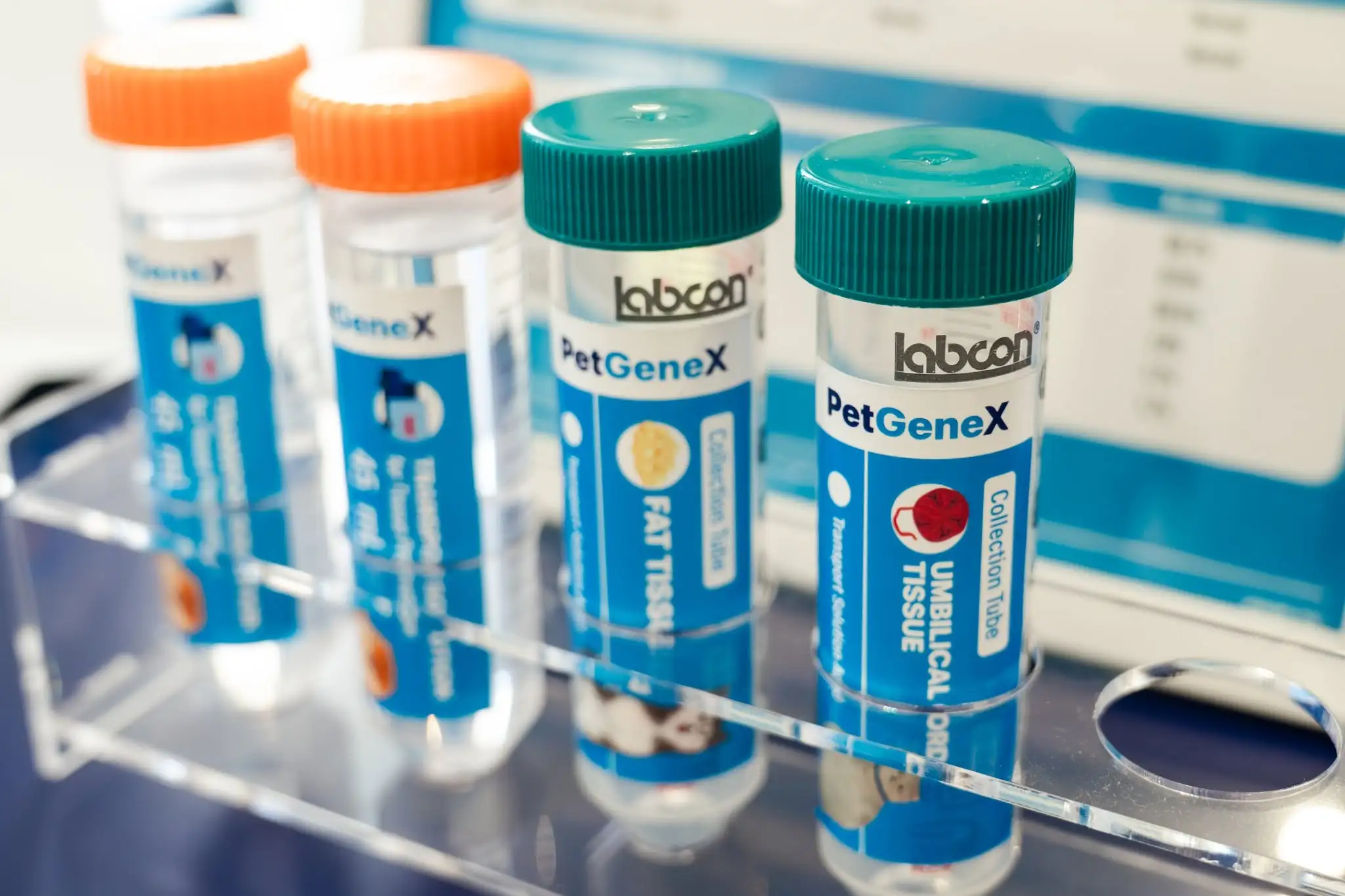
PetGeneX offers a peripheral blood-based stem cell banking approach that does not require surgery, general anesthesia, or G-CSF stimulation for sample collection.
The collected blood is sent to a laboratory for cell isolation, culture, and quality assessment before eligible cells are prepared for long-term storage.
Because MSCs are relatively uncommon in peripheral blood, successful isolation and expansion depend on the sample and laboratory process.
Which Stem Cell Collection Method Is Best for Senior Pets?
For older dogs and cats, minimizing unnecessary procedures is often an important consideration.
PetGeneX recommends considering blood-based stem cell collection for eligible senior pets, particularly when owners wish to avoid surgery or general anesthesia for sample collection.
The procedure is less invasive than surgical tissue collection and may be suitable for pets with certain age-related health concerns.
However, a veterinary assessment remains essential, and successful stem cell culture cannot be guaranteed for every sample.
How Can Stem Cells Support Senior Pets' Health and Quality of Life?
As pets grow older, maintaining comfort, mobility, and day-to-day wellbeing becomes increasingly important.
Mesenchymal Stem Cells (MSCs) have biological properties that may offer potential benefits in selected veterinary regenerative medicine applications.
Their possible roles include:
- Supporting inflammation regulation: MSCs can influence immune and inflammatory signaling, which may be relevant to certain health conditions.
- Supporting joint comfort and mobility: Some clinical studies in dogs with osteoarthritis have reported improvements in pain and joint function following MSC treatment.
- Supporting tissue-repair processes: MSCs produce biological signals involved in tissue repair, although this does not mean they can reverse aging or restore damaged organs.
- Providing an additional option for selected chronic conditions: MSC-based approaches are being explored for certain chronic diseases, but clinical benefits remain uncertain for many conditions.
Stem cell therapy is not a replacement for standard veterinary treatment, nor is it a proven way to reverse aging or extend a pet's lifespan.
The purpose of banking a pet's stem cells is to preserve a potential future care option, subject to cell quality, clinical evidence, and veterinary assessment.
Conclusion: Can Senior Dogs and Cats Still Bank Stem Cells?
Senior dogs and cats may still be candidates for stem cell banking. What matters most is not age alone, but overall health, existing medical conditions, medications, and the suitability of the collected sample.
For eligible older pets, blood-based collection may offer a less invasive option without requiring surgery or general anesthesia.
While storing stem cells cannot guarantee future treatment outcomes, it may provide another option for long-term health planning if a veterinarian determines that cell-based care is appropriate.
Because caring for senior pets is not only about spending more years together, but also about helping them enjoy a good quality of life throughout those years.
FAQs About Pet Stem Cell Banking for Senior Pets
1. Can a 10- or 15-year-old dog still bank stem cells?
Yes, some dogs aged 10–15 years or older may still be eligible. Suitability depends on their overall health, existing medical conditions, and the quality of the collected sample rather than age alone.
2. Can senior cats have their stem cells collected and stored?
Yes. Senior cats may be considered for stem cell banking following veterinary evaluation, especially if they have kidney, heart, or other chronic health conditions that require additional assessment.
3. What tests are needed before pet stem cell banking?
A veterinarian may recommend a physical examination, complete blood count (CBC), blood chemistry panel, and additional tests based on the pet's medical history and health status.
4. Can pets taking immunosuppressive medication bank stem cells?
They may still be considered, but the veterinarian must review the medication and underlying condition. A 14–30-day medication adjustment interval may be discussed in selected cases. Owners should never stop prescribed medication without veterinary guidance.
5. Why consider blood-based stem cell banking for senior pets?
Blood-based collection does not require surgery or general anesthesia for sample collection. This may be particularly helpful when choosing a less invasive approach for an older pet.
6. Can stem cells be successfully cultured from every senior pet?
No. The number and quality of cells vary between animals. Each sample must undergo isolation, culture, and quality assessment before it can be considered suitable for banking.
7. Can stem cell banking help senior pets live longer?
There is currently insufficient evidence that stem cell banking directly extends a pet's lifespan. Its purpose is to preserve cells as a potential option for future veterinary care.
Plan Your Senior Pet's Future Care with PetGeneX
If your dog or cat is entering their senior years, PetGeneX can help you understand the stem cell banking process, collection options, and the health considerations involved.
Learn how preserving your pet's own cells may become part of a thoughtful, long-term pet health plan.
Tel: 062-426-4145
LINE: @petgenex
------------------------
Scientific References
- American Animal Hospital Association (AAHA). (2023). 2023 AAHA Senior Care Guidelines for Dogs and Cats.
- AAHA. (2023). Diagnostic Tests and Recommended Frequencies for Senior Dogs and Cats.
- Lee, J., et al. (2017). Effect of donor age on the proliferation and multipotency of canine adipose-derived mesenchymal stem cells. Journal of Veterinary Science, 18(2), 141–148.
- Sato, K., et al. (2016). Isolation and characterisation of peripheral blood-derived feline mesenchymal stem cells. The Veterinary Journal, 216, 183–188.
- Halperin, S. M. (2025). Stem cells in canine osteoarthritis. Part 3: Clinical evidence and practical considerations. Companion Animal, 30(5).
- AAHA. (2023). Anesthetic and Surgical Considerations.
- VCA Animal Hospitals. Prednisone/Prednisolone.